Researchers from the Perkins Centre for Clinical Research in Emergency Medicine (CCREM) have helped deliver important new evidence that could influence the treatment of septic shock around the world.
The findings of the ARISE FLUIDS trial, published in the New England Journal of Medicine, compared two widely used approaches to the early treatment of septic shock in emergency departments.
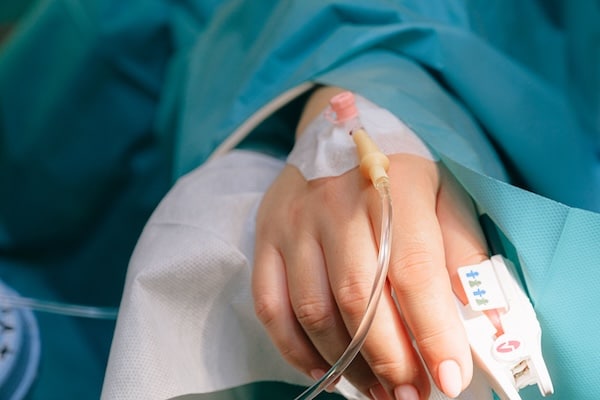
Septic shock is a life-threatening condition caused by a severe infection that leads to dangerously low blood pressure and organ dysfunction. Clinicians have long debated whether patients should receive larger volumes of intravenous fluids to restore circulation or whether fluid administration should be restricted with earlier use of vasopressor medications to support blood pressure.
The international study enrolled 1,000 patients across Australia, New Zealand and Ireland, and found that both treatment strategies resulted in similar outcomes after 90 days. However, patients treated with a restricted fluid strategy and earlier vasopressor use experienced significantly fewer cases of pulmonary oedema, a complication caused by excess fluid accumulating in the lungs. However, the vasopressor group required more admissions to intensive care.
CCREM researcher and Clinical Associate Professor at UWA, Dr Stephen Macdonald, who co-led the study, said the findings provide valuable evidence to help clinicians make informed treatment decisions.
“For many years, there has been uncertainty about the best way to manage fluids and blood pressure support in the earliest stages of septic shock,” Dr Macdonald said.
“This trial shows that using less fluid and introducing vasopressors earlier is a safe approach that achieves similar patient outcomes while reducing the risk of fluid-related complications such as pulmonary oedema.”
“Importantly, these results give clinicians high-quality evidence to guide treatment decisions in what is often a fast-moving and complex clinical situation.”
Dr Mcdonald and his co-lead investigator presented the findings in Belfast at Critical Care Reviews, sharing the results with an international audience of emergency medicine and critical care clinicians.
Head of CCREM and a co-author, Professor Daniel Fatovich, said the study highlights the importance of conducting large-scale clinical trials that address questions faced by frontline healthcare workers every day.
“Emergency clinicians manage septic shock on a regular basis and the decisions made in the first few hours can have significant consequences for patients and the health system,” Professor Fatovich said.
“The ARISE FLUIDS trial provides new evidence to inform those decisions and demonstrates the impact Australian-led emergency medicine research can have on clinical practice globally. In his conference presentation, Dr Macdonald stated that clinicians are doing a good job in deciding their resuscitation approach, providing individualised care for what is a package of treatments for sepsis”
The ARISE FLUIDS trial was led by the Australian and New Zealand Intensive Care Research Centre, and endorsed by the Australasian College for Emergency Medicine Clinical Trials Network, and the Australian and New Zealand Intensive Care Society Clinical Trials Group. It was funded by the Medical Research Future Fund. The Perkins CCREM contribution to the study was conducted at the Royal Perth Hospital Emergency Department.
You can read the full paper in the New England Journal of Medicine here.