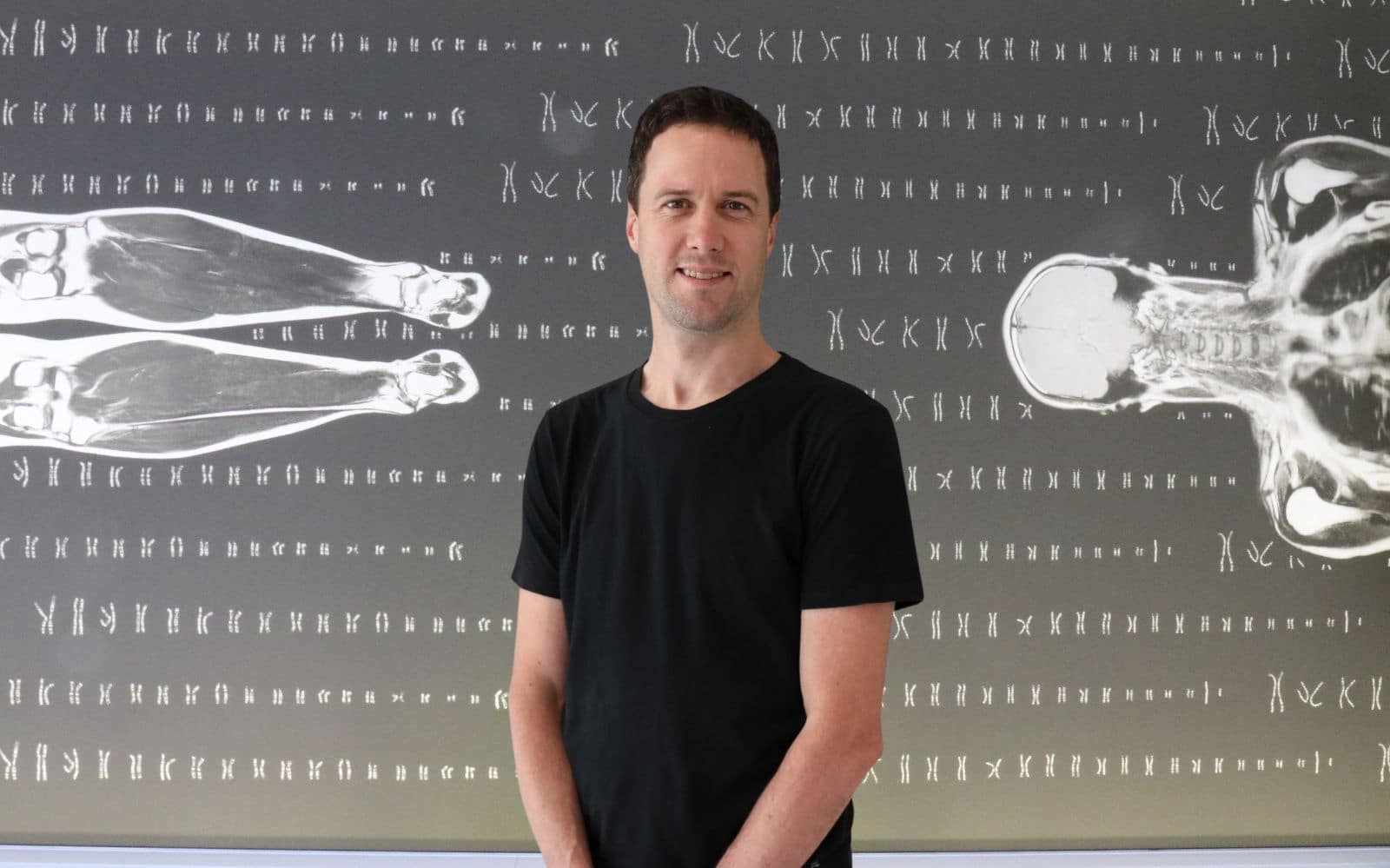
Professor Ryan Lister, Head of the Harry Perkins Institute of Medical Research Genome Biology and Genetic Diseases Program, has been appointed a Member of the Order of Australia (AM) in recognition of his significant service to biochemistry, genetic science and neuroscience.
In November 2022, Professor Lister was part of a Perkins and UWA research team that developed a world-first map showing gene activity changes in diverse human brain cell types from pre-birth to adulthood.
This discovery gives insights into cell function changes in neurological diseases such as brain cancers and debilitating disorders such as schizophrenia.
Professor Lister led a groundbreaking study, which was published the following year in Nature magazine, that developed a new method to reprogram human cells to better mimic embryonic stem cells, with significant implications for biomedical and therapeutic uses.
In a revolutionary advance in the mid-2000s, it was discovered that the non-reproductive adult cells of the body, called ‘somatic’ cells, could be artificially reprogrammed into a state that resembles embryonic stem (ES) cells, which have the capacity to then generate any cell of the body with widespread applications in disease modelling, drug screening and cell-based therapies. However, over time, the reprogrammed stems cells could revert back to their somatic states, affecting research based on those reprogrammed stems cells. Prof Lister’s research discovered how to wipe the “memory” of the reprogrammed stem cell, making them more stable in research applications.
In 2024 Professor Lister was one of two researchers at the Perkins awarded separate grants totalling $3.6million in federal government funding to provide researchers around the world with important insights into the ways disease genes behave and change.
In the same year, Professor Lister was awarded a Level 2 Leadership grant of $2,924,080 for his project ‘Exploiting epigenetic memory and manipulation to advance cell biotechnologies and disease treatment’.
This will help researchers gain a better understanding of diseases which can inform future therapies.
Last year, Professor Lister was one of the researchers from the Perkins, The University of Western Australia and the University of Adelaide who were awarded $960,000 through the Medical Research Future Fund’s 2024 Stem Cell Therapies Mission to develop advanced stem cell-based models that could pave the way for new treatments for rare and currently untreatable childhood brain disorders.
The team will use cutting-edge stem cell and genomics technologies to model rare epigenetic disorders such as Rubinstein-Taybi, Wiedemann-Steiner and Kabuki syndromes to uncover disease mechanisms and test targeted therapies.
“On a personal level this award means a great deal, recognition of what I’ve devoted my working life to,” said Professor Lister
“It’s a real honour, but not a solitary one: science is a team endeavour, and none of what I’ve achieved would have happened without my mentors, the talented research staff and students I’ve been lucky to work with, great collaborators across the country and the world, the institutions and people that support us, and ultimately the public investment that makes science possible.
“So I see this as recognition of all of that, not just of me.”
Through his work at The University of Western Australia’s School of Molecular Sciences’ ARC Centre for Plant Energy Biology, Professor Lister is also working on plants adapted to life in space where his work has the potential to revolutionise space agriculture.
He has been recognised for his work on genetic manipulation which can optimise plant productivity and nutrition, improve their ability to withstand climate change and pests, and even create high-value molecules efficiently.
In addition to its applications here on earth, this research has the potential to revolutionise space agriculture
CEO of the Perkins, Professor Peter Leedman AO, is immensely proud of Professor Lister, his work at the Perkins and his meaningful research.
“I am delighted to celebrate one of WA’s brightest minds and congratulate Ryan for this well-deserved recognition for a career defined by excellence,” he said.
“Ryan’s work has provided an important foundation for countless research projects here and around the world, and his collaborative approach and willingness to share his groundbreaking discoveries should be celebrated.”