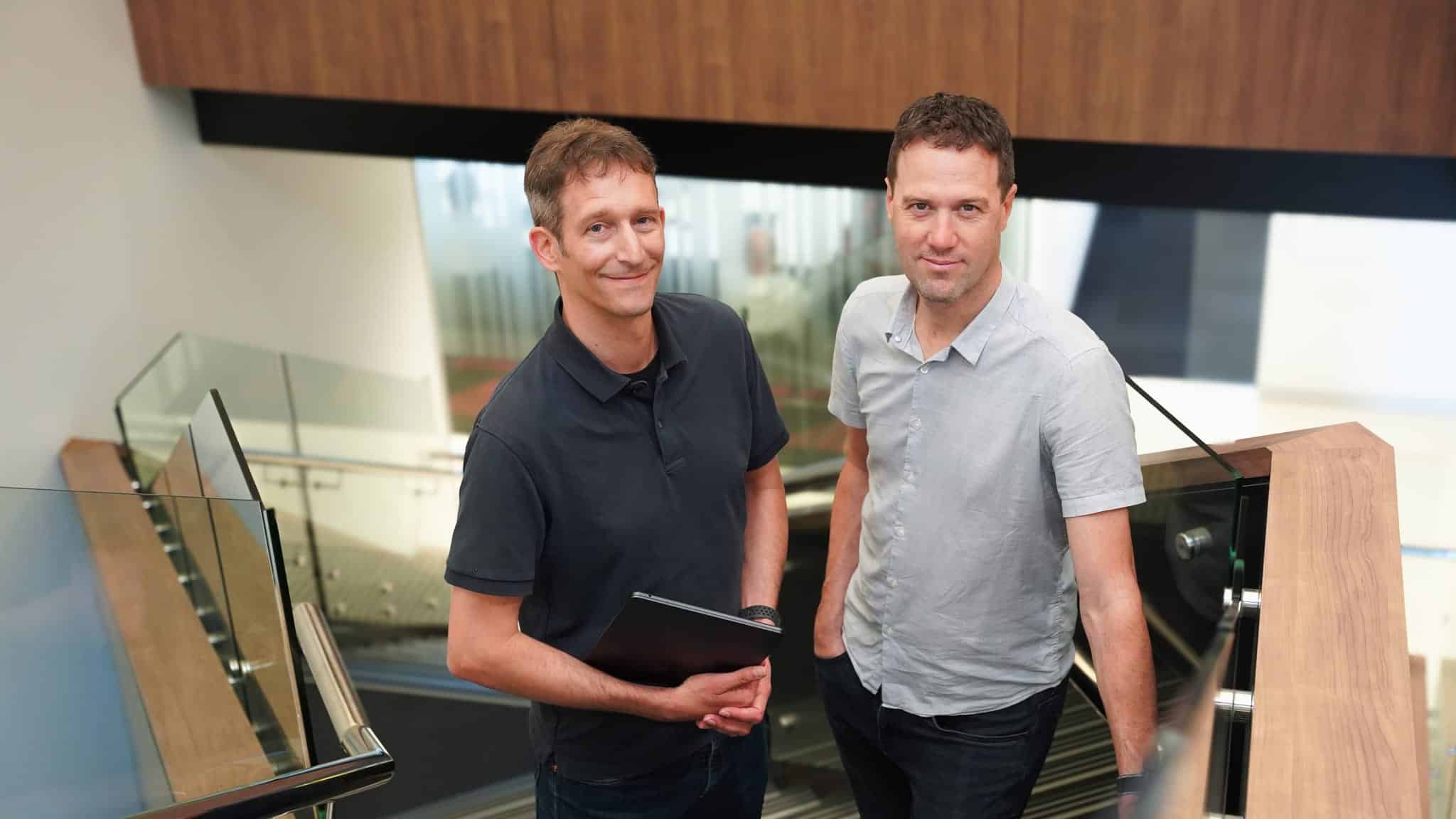
Professor Ryan Lister AM, Program Head, Genome Biology and Genetic Diseases Program at the Harry Perkins Institute of Medical Research and The University of Western Australia and Associate Professor Timo Lassmann, Theme Head, Precision Health at The Kids Research Institute Australia are celebrating their success in being awarded $6M in the Medical Research Future Fund 2026 National Critical Research Infrastructure (MRFF NCRI) scheme.
The investment will establish the WA Centre for Cell and Genome Engineering (CAGE), Australia’s first fully integrated genome engineering hub and will be co-led by Professor Lister and Associate Professor Lassmann.
By bringing these capabilities together under one coordinated centre, CAGE will accelerate the discovery of disease-causing genes, improve the interpretation of genetic variants, and support the development of new targeted therapies for rare, paediatric and complex diseases.
CAGE is a collaborative initiative with the Perkins, The Kids, UWA and the WA Department of Health, with clinical translation supported by Cell and Tissue Therapies WA (CTTWA) at Royal Perth Hospital and will be located at the Perkins and The Kids.
This partnership brings together leading expertise in genome engineering, stem cell science, paediatric research and clinical translation.
With support from the MRFF NCRI scheme, CAGE will reduce reliance on overseas services, shorten diagnostic pathways for families, and position Western Australia as a national leader in precision medicine.
CAGE will also play a key role in training the next generation of scientists and supporting emerging biotech and medtech companies, helping drive innovation and economic growth.
The establishment of CAGE marks a significant step forward for Australian medical research, creating new opportunities for discovery, collaboration and improved health outcomes for communities across the country.
“We’re establishing the WA Centre for Cell and Genome Engineering (CAGE) to advance medical research in WA, by empowering researchers to develop new diagnostics, treatments and personalised therapies,” Professor Lister said.
“CAGE will offer unprecedented local access to cutting-edge cellular and genomic technologies, including CRISPR technologies for high-throughput screening and creating precision-edited cellular models to study diseases, identifying genes and mutations that cause illness, discovering new drug targets and improving therapies.”
CAGE is supported by matching investment from the WA State Government and the Stan Perron Charitable Foundation, together with the Wilhelm Foundation and patient advocacy groups who have helped shape the centre’s rare disease research priorities.
“CAGE closes the gap between finding a genetic variant and knowing what it means for a patient, turning uncertain results into functional evidence that can finally deliver a diagnosis,” Associate Professor Lassmann said.
Professor Peter Leedman AO, CEO of the Harry Perkins Institute of Medical Research is looking forward to seeing the establishment of the WA Centre for Cell and Genome Engineering.
“I would like to congratulate Professor Ryan Lister and Associate Professor Timo Lassmann on being awarded these significant funds in the 2026 MRFF NCRI scheme.
“These are exciting times and I look forward to seeing the WA Centre for Cell and Genome Engineering (CAGE) flourish and our commitment to research into rare, paediatric and complex diseases advancing medical research in WA and enhancing our global standing in this field,” he said.
Professor Caroline Homer AO, Executive Director of The Kids, said the grant was an extraordinary win for WA children and families.
“CAGE will turn complex genetic data into clear answers, helping patients get better health outcomes, faster. By embedding state-of-the-art genomic engineering into our research, CAGE will speed up rare, paediatric and complex disease diagnosis and deliver life-changing therapies to WA kids sooner.”