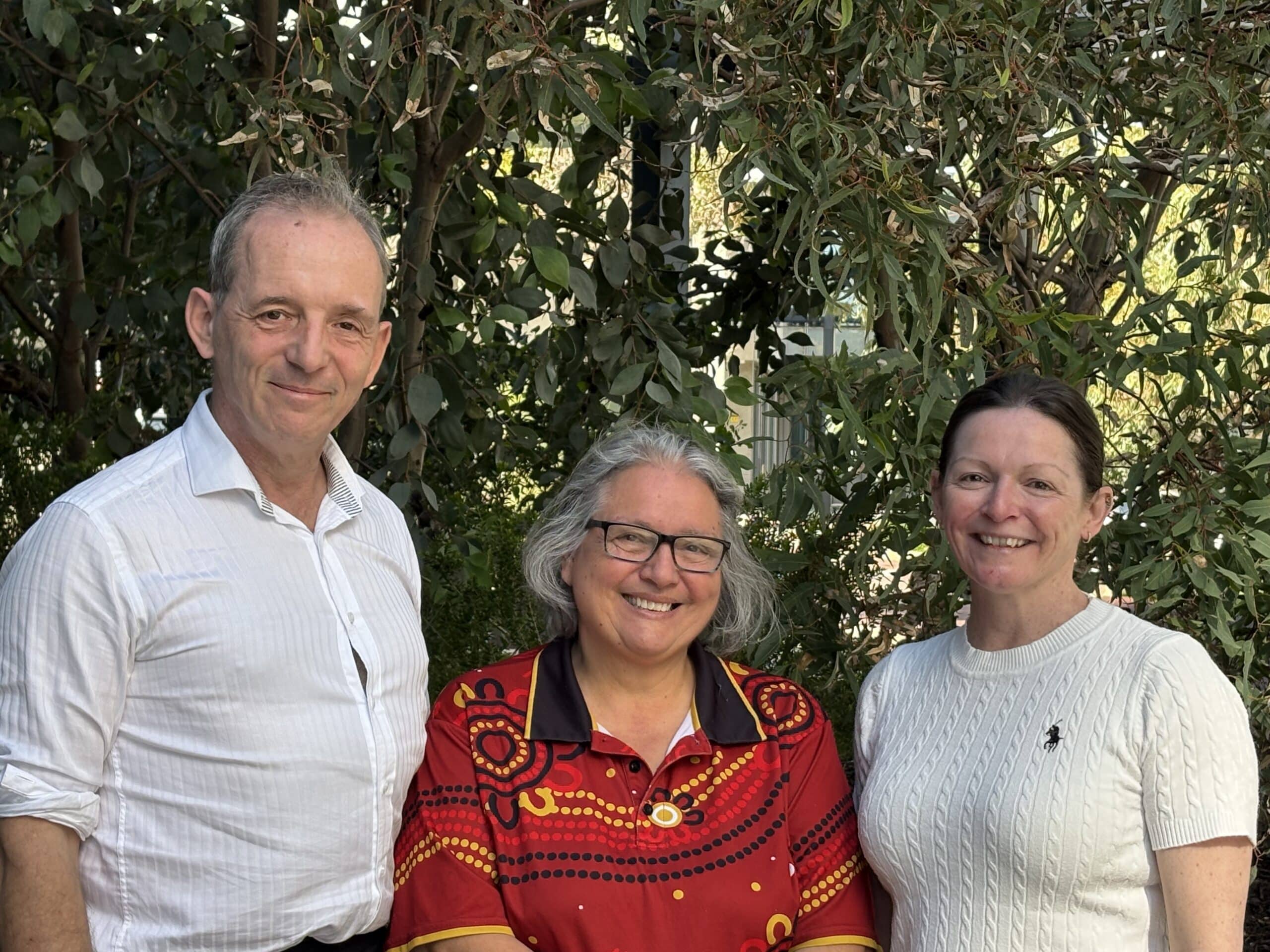
Associate Professor Andrew Redfern, Group Leader Translational Oncology lab from the Harry Perkins Institute of Medical Research and Consultant Medical Oncologist at Fiona Stanley Hospital; Ms Leanne Pilkington, Honorary Senior Cancer Research Associate at the Perkins; and Dr Katie Meehan, Senior Research Officer at the Perkins and Adjunct Senior Lecturer at the School of Biomedical Sciences at The University of Western Australia, were successful in receiving $100K over two years from the Medibank Better Health Research Hub.
The grant will be used to establish and pilot a first-of-a-kind Aboriginal and Torres Strait Islander peoples Breast Cancer Advisory Service (ABCAS) incorporating a statewide multi-disciplinary planning meeting based at Fiona Stanley Hospital with integration of rural and remote services.
Support from the Medibank Better Health Research Hub in recruiting an Aboriginal Cancer Journey Coordinator, to provide culturally safe guidance, improve continuity of care, support wellbeing and enhance outcomes for Aboriginal women, is critical to this project’s success.
Cancer has a profound impact on Aboriginal people and breast cancer is a significant contributor to this disparity due to poorer survival rates.
This project will co-design an Aboriginal Breast Cancer Advisory Service to complement existing cancer services, adding an essential layer of culturally safe, biologically tailored, Aboriginal-governed support.
The service will ensure personally focused care planning, assisting Aboriginal women to navigate care in, and beyond tertiary hospitals, manage treatment-related side effects and integrate cultural knowledge.
This model will improve care continuity, confidence and wellbeing across the cancer journey.
Ms Pilkington is a Nyoongar woman with more than 30 years’ experience across health, aged-care and education in remote, regional and urban WA, with a focus on Aboriginal health programs.
“I have provided a cultural lens throughout the ideation of this project and will continue to do so that this work is done in a way that is appropriate, respectful and meaningful to Aboriginal people,” she said.
“The research design places Aboriginal women with lived experience of breast cancer, and their families, at the centre of decision-making throughout the project and will continue to reflect Aboriginal women’s needs and preferences across their cancer journey, including diagnosis, treatment and survivorship.
“Women’s views on communication, decision-making, cultural practices and family involvement will ensure that care is culturally safe, practical and responsive rather than solely disease focused.”
Once the program is established, the team plans to extend this framework beyond breast cancer, to include lung cancer initially and then expanding to all other cancers.
“I will be seeing patients at the coalface ensuring that they are not getting any lesser treatment and make sure it is both effective and robust,” Professor Redfern said.
“Crucially, we will evaluate the cultural responsiveness of the service through patient surveys and staff reflections.
“As the service matures, there are plans to facilitate an ‘Aboriginal cancer community’ group to help connect Aboriginal people with cancer who may be at different stages of their journey.
“Aboriginal people coming through the service will have the choice to ‘opt in’ to join this community which will give them access to an online forum where people can ask questions, share advice and exchange experiences.”
Dr Meehan is looking forward to seeing the service flourish and expand into other cancers.
“My role is to make sure this pilot is properly evaluated from day one, so what we learn from ABCAS can genuinely inform how the service grows – both in scale and into other cancer types like lung and bowel cancer,” she said.
“We want the evidence base to be as strong as the model itself, so this isn’t just a good idea, it’s one we can prove works and expand with confidence.”
Medibank’s Director of Research Strategy & Partnerships Dr Dariush Etemadmoghadam said the health company was proud to partner with the Perkins on this important Aboriginal-led research.
“Bringing together community knowledge, lived experience and clinical expertise is critical to shaping innovative models of cancer care that respects cultural knowledge, meets individual needs and drives real-world impact,” Dr Etemadmoghadam said.
The Perkins CEO, Peter Leedman AO congratulated those involved in receiving this inaugural grant from the Medibank Better Health Research Hub.
“National data shows that, once diagnosed with breast cancer, Aboriginal women are significantly more likely to die from the disease than their non-Aboriginal contemporaries,” he said.
“Multiple factors contribute to this issue, with Aboriginal women being more likely to live remotely, experience socioeconomic hardship, present with larger tumours, be diagnosed with more aggressive types of breast cancer, experience delays across the diagnostic and treatment pathways and experience more severe side effects from treatments.
“This new role of Aboriginal Cancer Journey Coordinator will significantly improve engagement, trust and continuity of cancer care.”