Year 8/9: Mending Broken Hearts
Weekdays during school term | 9:30 am – 2:30 pm
Weekdays during school term | 9:30 am – 2:30 pm
Explore the complex interplay between the Circulatory System and the Human body, and how understanding the systems and cellular interactions plays a role in developing new treatments.
Designed for Year 8 and 9 Biological Sciences
$50 per student (minimum 20 students)
Maximum 32 students
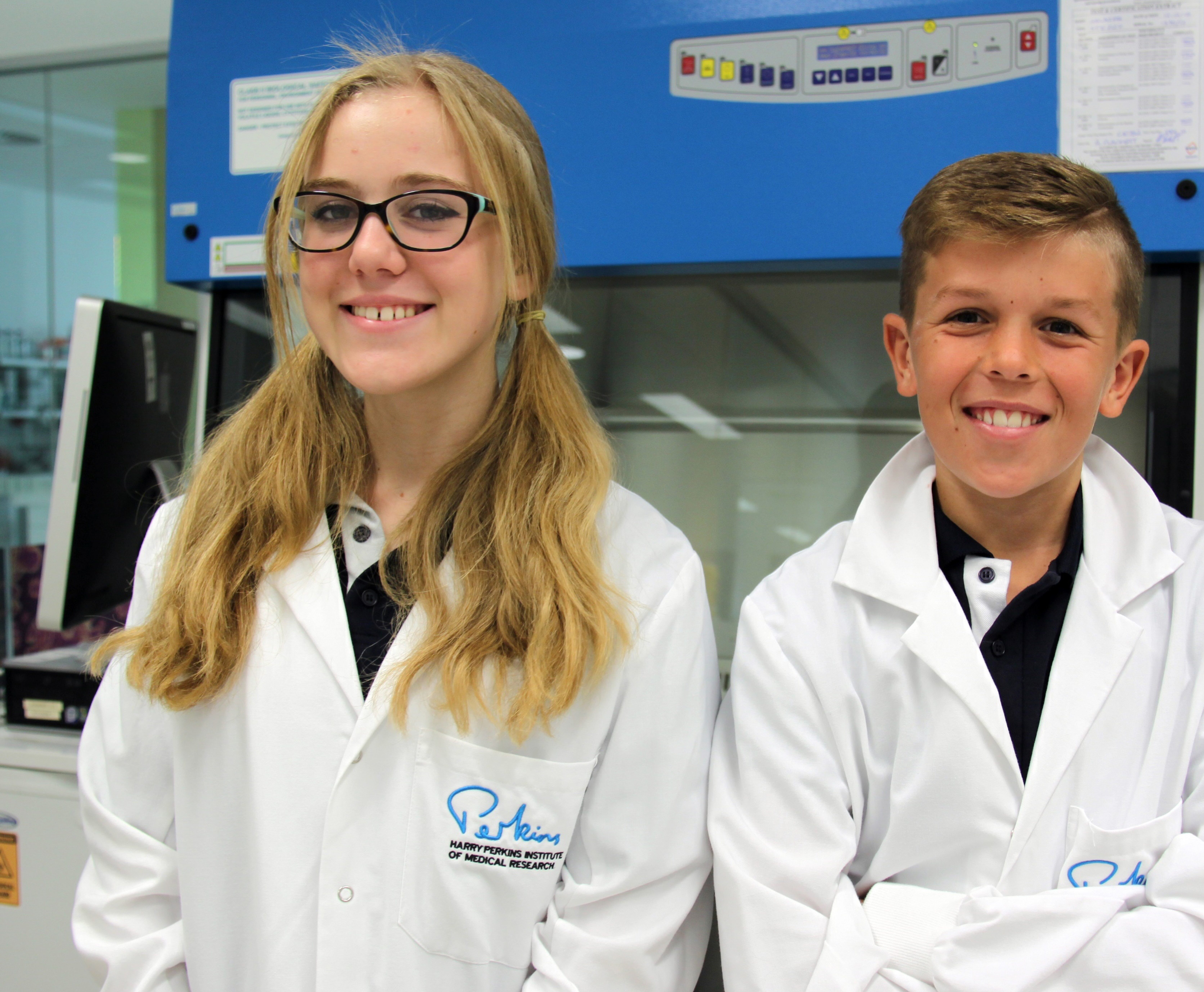
Students will explore the delicate interactions between the Circulatory System and Systems throughout the body, and how breakdowns in this delicate symbiosis can create some of the greatest health burdens of the 21st century. With this knowledge, students will use our dedicated PC2 Laboratory to explore the cellular mechanisms of heart disease, and how researchers at the Perkins are exploiting these mechanisms to create breakthrough treatments for heart disease.
Students begin the day conducting an investigative activity to get a greater understanding of how human systems interplay with the Heart and Circulatory Systems. Using these investigative activities, students will be able to establish the heart health of a patient with undiagnosed symptoms.
This will be followed by a lab activity that allows students to culture and stain Human Heart Cells, identify organelles and their relevance to heart health, and build novel drugs to treat arterial disease, such as Atherid, a treatment for Peripheral Arterial Disease in development by researchers at the Perkins.
Year 8 Australian Curriculum Links
Science Understanding:
Analyse the relationship between structure and function of cells, tissues and organs in a plant and an animal organ system and explain how these systems enable survival of the individual (AC9S8U02)
Science as a Human Endeavour:
Examine how proposed scientific responses to contemporary issues may impact on society and explore ethical, environmental, social and economic considerations (AC9S8H03)
Science Inquiry Skills:
Plan and conduct reproducible investigations to answer questions and test hypotheses, including identifying variables and assumptions and, as appropriate, recognising and managing risks, considering ethical issues and recognising key considerations regarding heritage sites and artefacts on Country/Place (AC9S8I02)
Select and use equipment to generate and record data with precision, using digital tools as appropriate (AC9S8I03)
Year 9 Australian Curriculum Links
Science Understanding:
compare the role of body systems in regulating and coordinating the body’s response to a stimulus, and describe the operation of a negative feedback system (AC9S9U01)
Science as a Human Endeavour:
investigate how advances in technologies enable advances in science, and how science has contributed to developments in technologies and engineering (AC9S9H02)
Science Inquiry Skills:
Plan and conduct reproducible investigations to answer questions and test hypotheses, including identifying variables and assumptions and, as appropriate, recognising and managing risks, considering ethical issues and recognising key considerations regarding heritage sites and artefacts on Country/Place (AC9S9I02)
Select and use equipment to generate and record data with precision, using digital tools as appropriate (AC9S9I03)
All donations of $2 and over are tax deductible in Australia.



Perkins is registered with the Australian Taxation Office as a Deductible Gift Recipient (DGR): Charitable Fundraising Authority No DGR CC20761
The Harry Perkins Institute of Medical Research recognises Australia’s first healers and scientists, the Aboriginal and Torres Strait Islander peoples. We acknowledge the Whadjuk people of the Noongar nation, the Traditional Custodians of the lands where we live and work, and pay respects to their elders past and present.