PhD Student
Nikayla Batohi
Melanoma Discovery
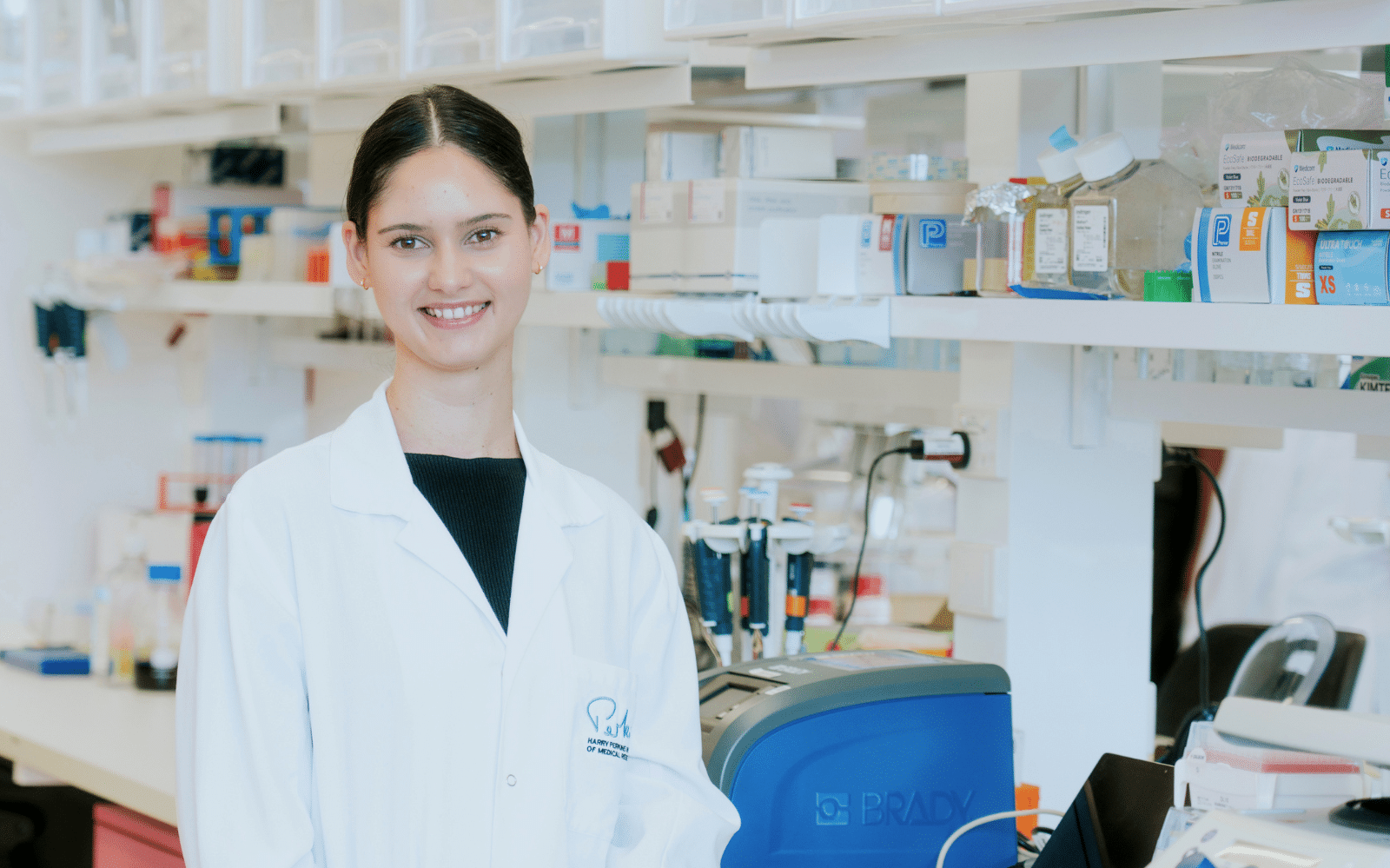
Nikayla Batohi is a PhD Research Student in the Melanoma Discovery Lab at the Harry Perkins Institute of Medical Research and the Centre for Precision Health at Edith Cowan University (ECU). She is completing a PhD in Medical and Health Sciences under the supervision of Professors Elin Gray, Jonas Nilsson and Jason Waithman, with a research focus on tumour-infiltrating lymphocyte (TIL) therapy for melanoma.
She completed her BSc and BHSc (Honours) in Clinical Microbiology and Infectious Diseases (cum laude), followed by an MSc in Medicine (cum laude) at the University of the Witwatersrand, South Africa.
Her research focuses on understanding the immune determinants of effective TIL therapy by integrating preclinical melanoma models with patient-derived samples. Using functional immune assays, advanced flow and spectral cytometry, spatial immunophenotyping and T-cell receptor sequencing, Nikayla aims to identify tumour-reactive T-cell features that predict therapeutic response and durability. Her work seeks to support biomarker discovery and inform the optimisation of personalised immunotherapy strategies for melanoma patients.
In addition to her research, Nikayla is actively involved in teaching and community engagement, serving as a demonstrator at the Perkins BioDiscovery Laboratory and The University of Western Australia, and contributing to science outreach initiatives locally and internationally.
View Nikayla’s Google Scholar profile.
PhD Student
Nikayla Batohi
Melanoma Discovery